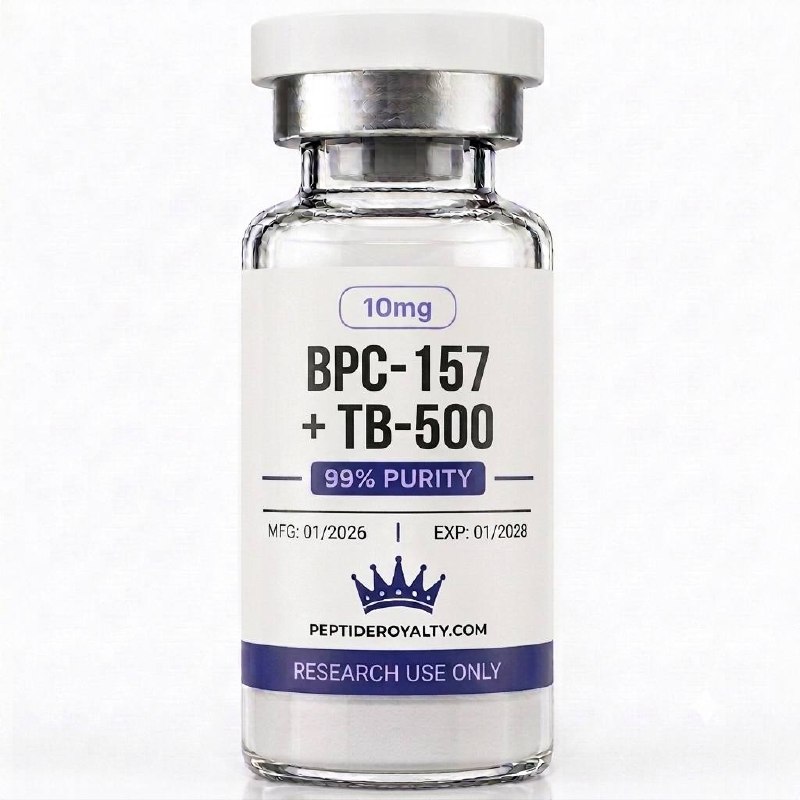
BPC-157 + TB-500
Research HubWhat isBPC-157 + TB-500?
Quantity
Synergistic blend of BPC-157 and TB-500 for comprehensive tissue repair and recovery research. Dual-action peptide combination.
⚠️ For research purposes only. Not for human consumption. By purchasing you confirm you are a qualified researcher.
BPC-157 + TB-500 Overview
The BPC-157 + TB-500 blend combines two synthetic peptides studied for their signaling pathway interactions. BPC-157 is known for its potential effects on molecular signaling, structural remodeling, and cytokine modulation, while TB-500 (a fragment of Thymosin Beta-4) is associated with epithelial modeling, angiogenesis, and extracellular matrix dynamics. Together, they may provide complementary activity across multiple pathways in controlled experimental settings.
BPC-157 + TB-500 Structure
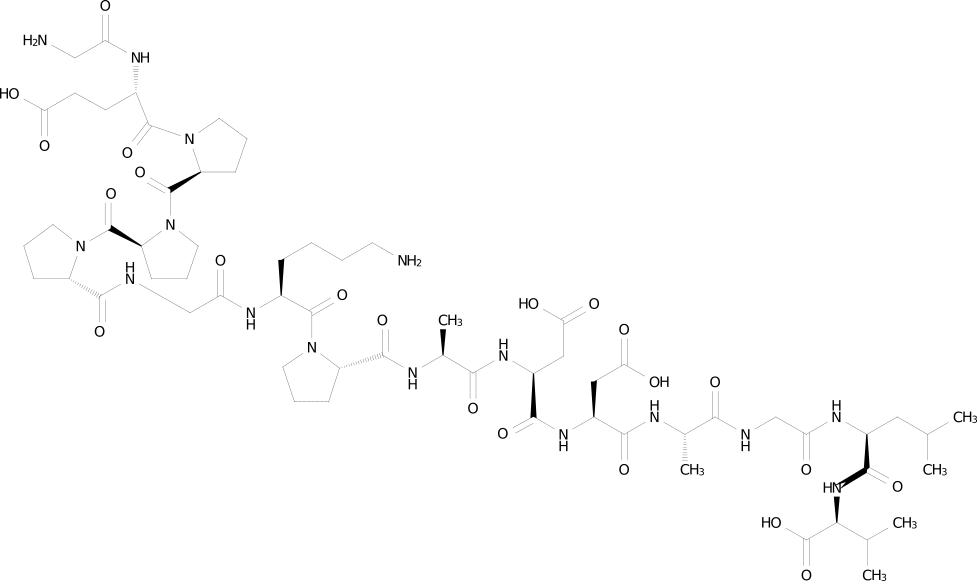
BPC-157
CAS #: 137525-51-0
Formula: C₆₂H₉₈N₁₆O₂₂
Weight: 1419.556 g/mol
PubChem ID: 108101

TB-500
CAS #: 77591-33-4
Formula: C₆₂H₉₈N₁₆O₂₂
Weight: 1419.556 g/mol
PubChem ID: 108101
Research Findings
BPC-157 and TB-500 have been studied in structural, vascular, epithelial, and systemic models, with research exploring their effects on tendon-to-bone interface modeling, collagen organization, angiogenesis, molecular migration, and systemic signaling. These findings highlight their roles in matrix dynamics, vascular pathways, and pathway activity in preclinical settings.Key Areas of Resarch: Structural: Tendon-to-bone, collagen, matrixVascular: Angiogenesis, nitric oxide, remodelingEpithelial: Migration, signaling, matrixSystemic: Gastric, survival, pathway dynamicsTogether, these findings suggest broad experimental applications for BPC-157 and TB-500 across multiple biological pathways. Their combined influence on collagen synthesis, vascular formation, cytokine modulation, and systemic signaling provides a versatile foundation for research into molecular remodeling, pathway dynamics, and experimental biology.
Same Category