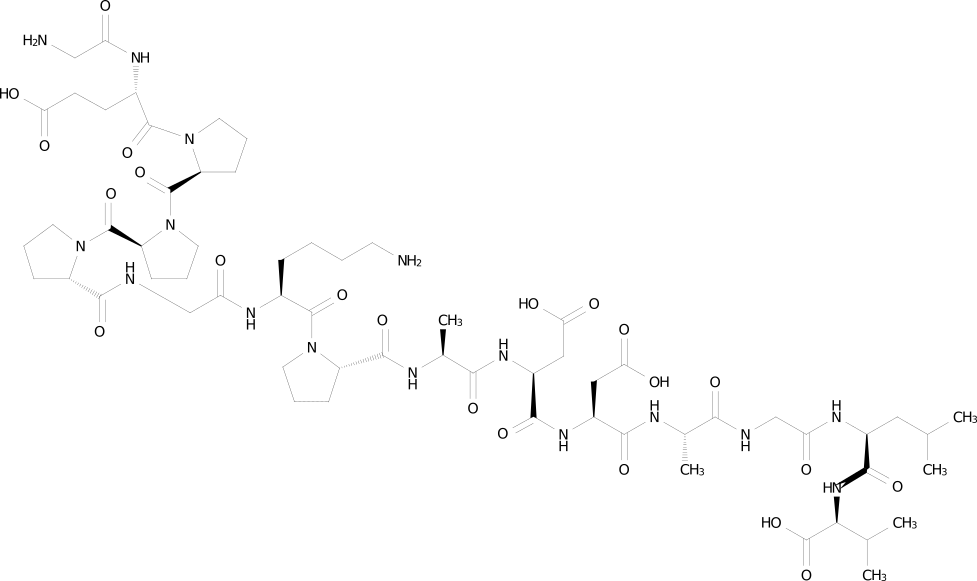
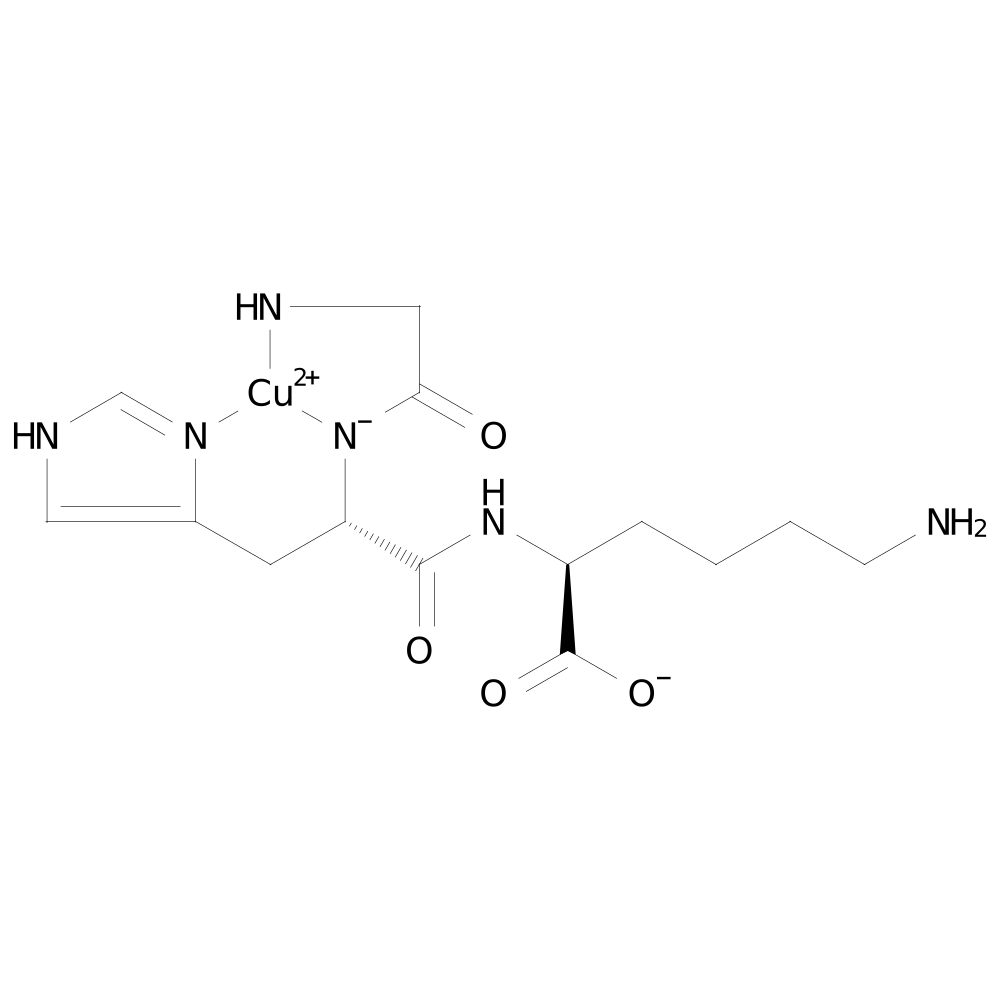
What is BPC-157 + TB-500?
The BPC-157 + TB-500 blend combines two synthetic peptides studied for their signaling pathway interactions. BPC-157 is known for its potential effects on molecular signaling, structural remodeling, and cytokine modulation, while TB-500 (a fragment of Thymosin Beta-4) is associated with epithelial modeling, angiogenesis, and extracellular matrix dynamics. Together, they may provide complementary activity across multiple pathways in controlled experimental settings.
Chemical Profile
BPC-157
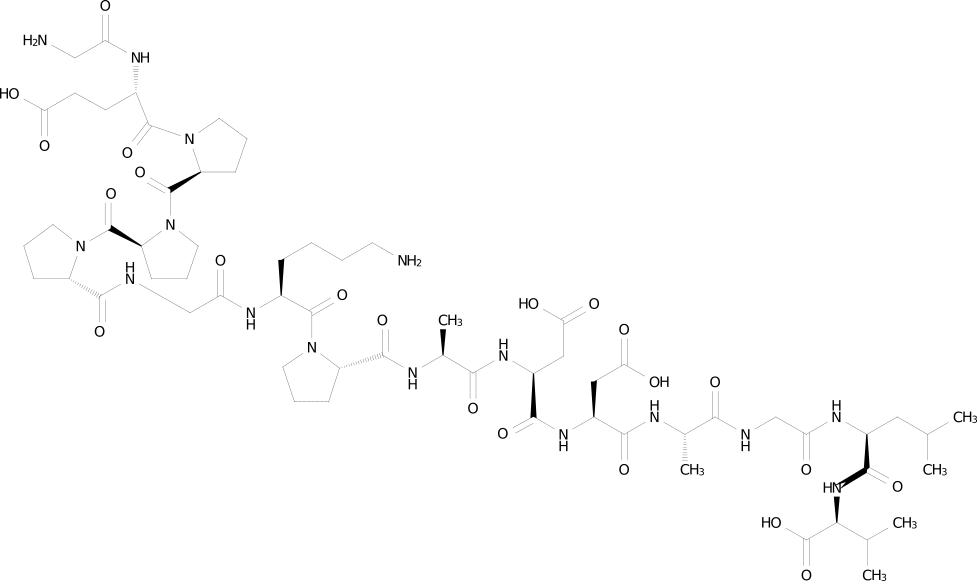
TB-500

Published Research Findings
The following findings are summarized from peer-reviewed literature cited in the References section below.
BPC-157 and TB-500 have been studied in structural, vascular, epithelial, and systemic models, with research exploring their effects on tendon-to-bone interface modeling, collagen organization, angiogenesis, molecular migration, and systemic signaling. These findings highlight their roles in matrix dynamics, vascular pathways, and pathway activity in preclinical settings.Key Areas of Resarch: Structural: Tendon-to-bone, collagen, matrixVascular: Angiogenesis, nitric oxide, remodelingEpithelial: Migration, signaling, matrixSystemic: Gastric, survival, pathway dynamicsTogether, these findings suggest broad experimental applications for BPC-157 and TB-500 across multiple biological pathways. Their combined influence on collagen synthesis, vascular formation, cytokine modulation, and systemic signaling provides a versatile foundation for research into molecular remodeling, pathway dynamics, and experimental biology.
BPC-157 + TB-500: Rationale for Combination Research
The BPC-157 and TB-500 combination blend is studied on the basis that these two peptides engage complementary but distinct biological pathways in tissue repair and regeneration research. BPC-157 is a 15-amino-acid peptide with documented activity in angiogenesis, nitric oxide modulation, gut mucosal protection, and cytoprotective signaling. TB-500 (Thymosin Beta-4) is a 43-amino-acid peptide whose primary documented mechanism involves actin monomer sequestration — regulating the cytoskeletal dynamics essential for cell migration during wound response. These two mechanisms represent complementary arms of tissue repair: BPC-157 promotes blood vessel formation and cytoprotective signaling while TB-500 promotes the directed cellular migration that physically closes wounds and remodels tissue architecture. (Source: Sikiric P. et al., 1993 — PMID: 8298609; Goldstein A.L. & Hannappel E., 2012 — PMID: 22820747)
Wound Healing Research: Individual Component Evidence
Both components carry independent peer-reviewed research supporting their individual roles in wound healing models. BPC-157 demonstrated accelerated wound closure in alkali burn rat models, with documented improvement in granulation tissue formation, reepithelialization, VEGF expression, and endothelial cell proliferation (Hsieh et al., 2015 — PMID: 25995620). TB-500 was shown by Malinda et al. (1999) to stimulate directional migration of human umbilical vein endothelial cells (HUVECs) in a dose-dependent manner — a mechanistic finding directly relevant to angiogenesis and wound closure. The combination of VEGF upregulation from BPC-157 and endothelial migration stimulation from TB-500 creates a research model where both the chemical signaling for new vessel formation and the physical cellular movement required to build those vessels are simultaneously studied. (Source: Hsieh MJ. et al., 2015 — PMID: 25995620; Malinda K.M. et al., 1999 — PMID: 10069817)
Musculoskeletal Research Applications
Research by Chang et al. (2011) investigated the therapeutic potential of BPC-157 in musculoskeletal injury models, documenting effects on tendon and ligament repair in animal preparations. Separately, Thymosin Beta-4 has been studied in cardiac and musculoskeletal repair models, with research noting expression upregulation following tissue injury. The combination of these two peptides has attracted research interest for musculoskeletal biology specifically because both BPC-157's tendon repair signaling and TB-500's actin-mediated cellular migration are relevant to the biology of connective tissue repair. Together they provide a dual-mechanism platform for studying musculoskeletal tissue repair pathways. All findings are from published peer-reviewed literature. For research use only. (Source: Chang C-H. et al., 2011 — PMID: 21704641; Goldstein A.L. & Hannappel E., 2012 — PMID: 22820747)
References
All research findings on this page are derived from the following peer-reviewed publications. Peptide Royalty makes no independent claims — all statements are attributable to the cited authors and their respective studies.
Source BPC-157 + TB-500 for Your Research
Laboratory tested · USA manufactured · COA available on every batch
Shop All Products →