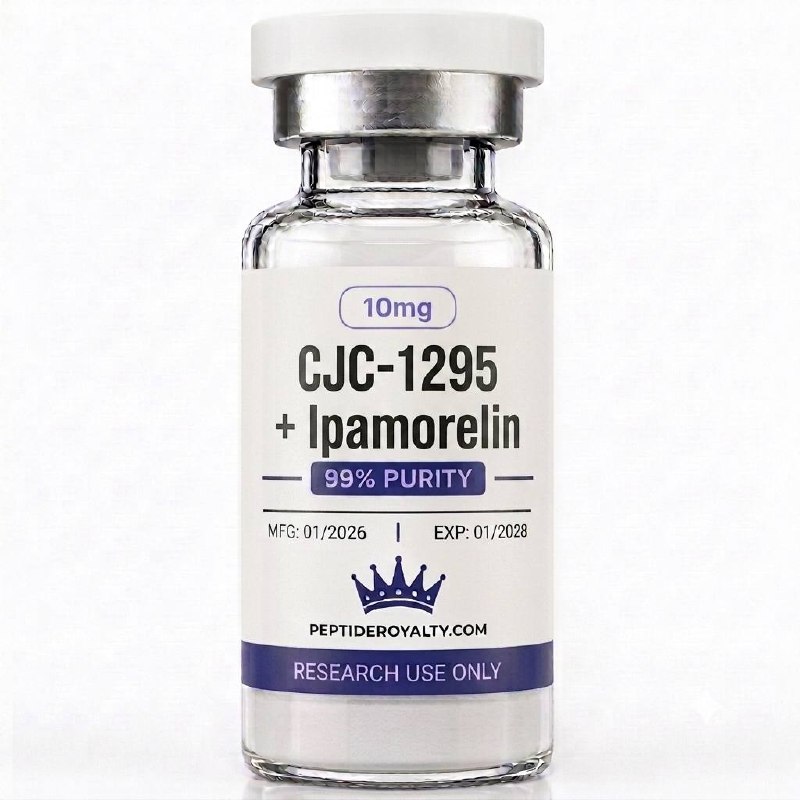
CJC-1295 + Ipamorelin
Research HubWhat isCJC-1295 + Ipamorelin?
Quantity
Synergistic blend of CJC-1295 and Ipamorelin for amplified growth hormone stimulation research. Dual-action GHRH + secretagogue combination.
⚠️ For research purposes only. Not for human consumption. By purchasing you confirm you are a qualified researcher.
CJC-1295 + Ipamorelin Overview
The CJC-1295 + Ipamorelin blend combines two peptides studied for their effects on endocrine signaling pathways. CJC-1295, a GHRH analog, is associated with sustained modulation of somatotroph axis activity and downstream signaling cascades. Ipamorelin, a selective secretagogue-type peptide, has been studied for its selective pituitary signaling activity without significant off-target pathway interference. Together, they may provide complementary activity across multiple endocrine and systemic pathways in experimental settings.Teichman S.L. et al. (2006).
CJC-1295 + Ipamorelin Structure

CJC-1295
CAS #: 446036-97-1
Formula: C₁₅₂H₂₅₂N₄₄O₄₂
Weight: 3367.9 g/mol
PubChem ID: 91976842
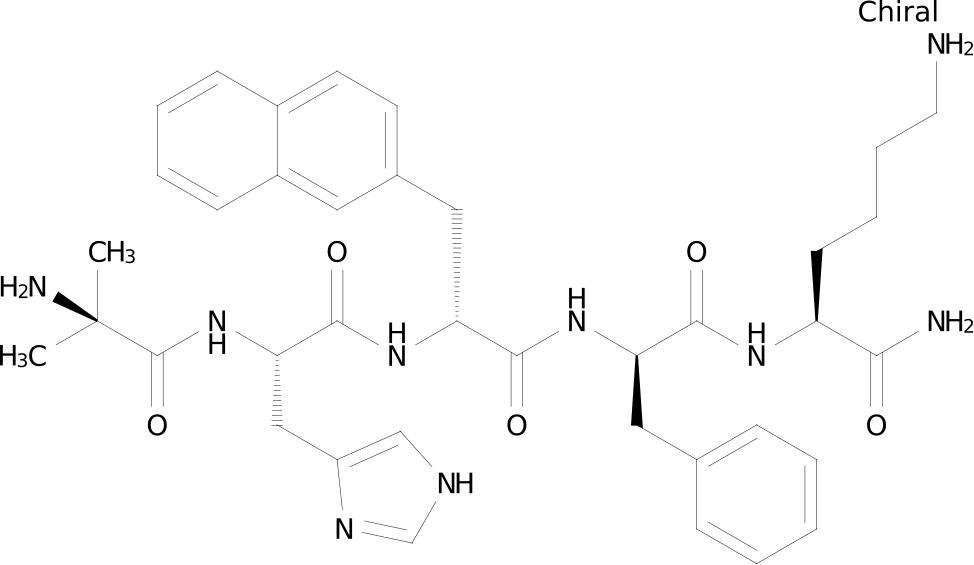
Ipamorelin
CAS #: 170851-70-4
Formula: C₃₈H₄₉N₉O₅
Weight: 711.9 g/mol
PubChem ID: 9831659
Research Findings
CJC-1295 and Ipamorelin have been examined in endocrine, signaling, experimental, and systemic models, with research exploring their influence on somatotroph axis pathways, downstream cascades, pathway activity, and molecular viability. Studies highlight their role in signaling kinetics, remodeling processes, and systemic resilience in preclinical settings.
Key Areas of Research:
- Endocrine: Somatotroph axis, signaling, cascadesSignaling: Lipid pathways, dynamics, markersMolecular: Proliferation, remodeling, viabilitySystemic: Vascular, resilience, pathway activityTogether, these findings suggest broad experimental potential for CJC-1295 and Ipamorelin across multiple biological pathways. By modulating endocrine signaling, influencing downstream pathway activity, and supporting molecular and systemic resilience, this combination provides a versatile platform for research into remodeling, pathway dynamics, and experimental modeling in laboratory settings.Teichman S.L. et al., Journal of Clinical Endocrinology & Metabolism, 2006
References
Same Category