What is CJC-1295 + Ipamorelin?
The CJC-1295 + Ipamorelin blend combines two peptides studied for their effects on endocrine signaling pathways. CJC-1295, a GHRH analog, is associated with sustained modulation of somatotroph axis activity and downstream signaling cascades. Ipamorelin, a selective secretagogue-type peptide, has been studied for its selective pituitary signaling activity without significant off-target pathway interference. Together, they may provide complementary activity across multiple endocrine and systemic pathways in experimental settings.Teichman S.L. et al. (2006).
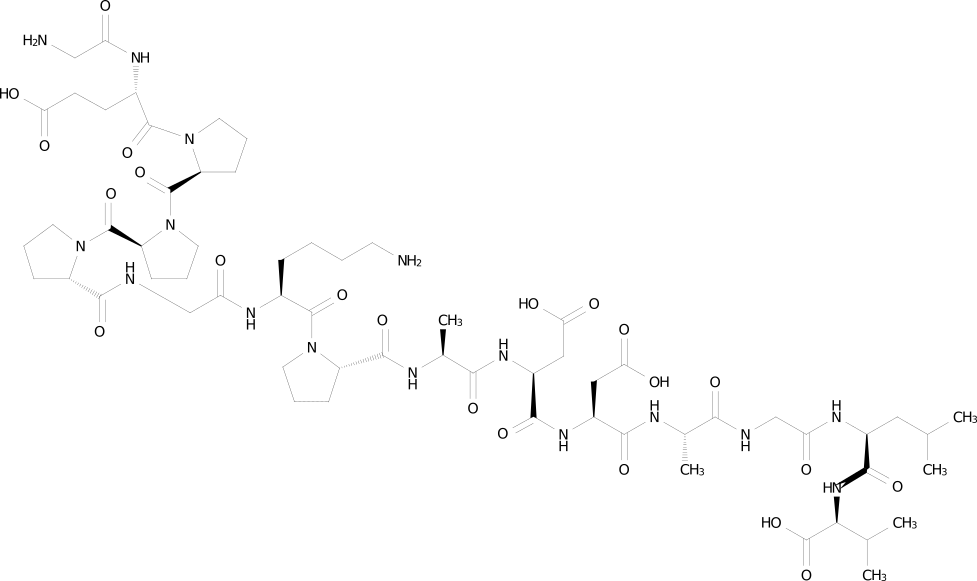
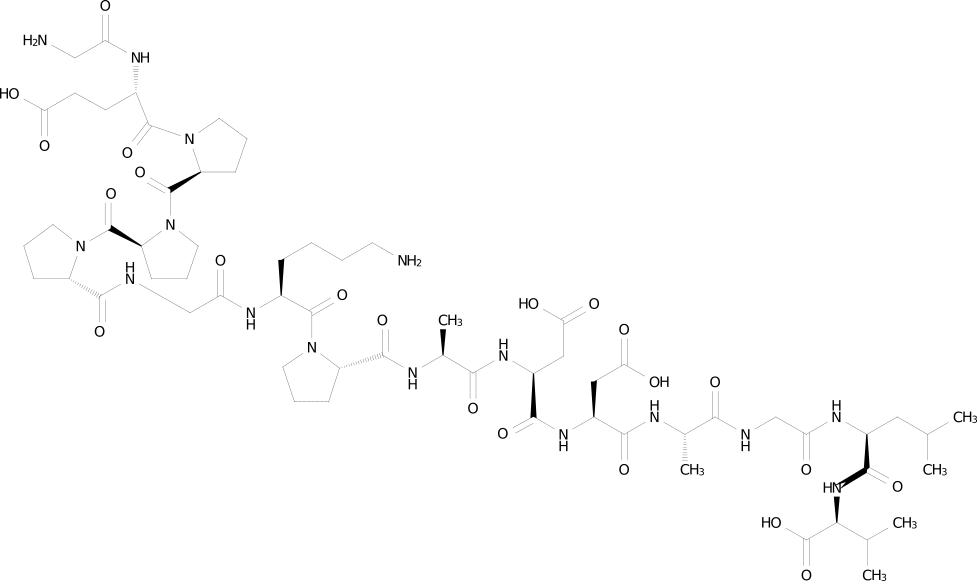
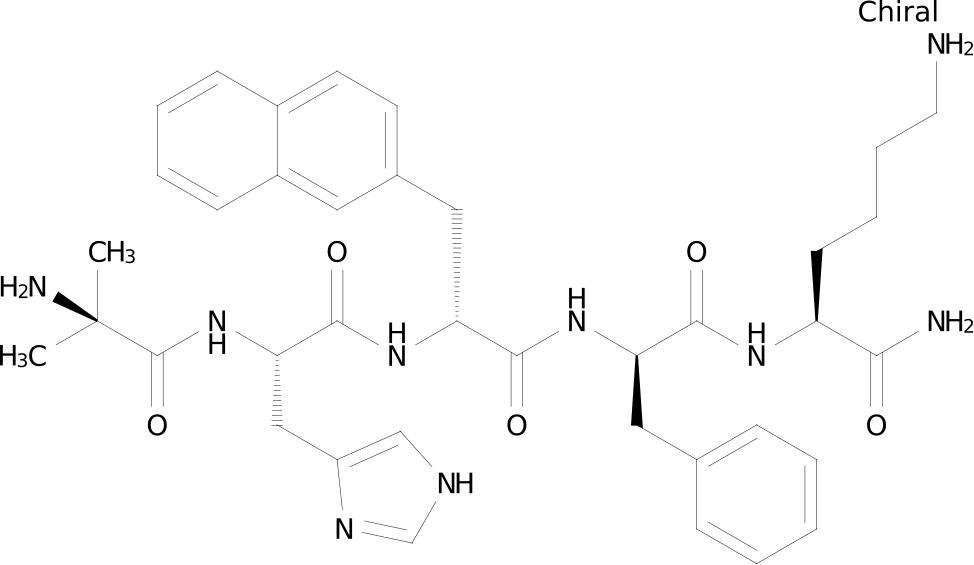
Chemical Profile
CJC-1295

Ipamorelin
Published Research Findings
The following findings are summarized from peer-reviewed literature cited in the References section below.
CJC-1295 and Ipamorelin have been examined in endocrine, signaling, experimental, and systemic models, with research exploring their influence on somatotroph axis pathways, downstream cascades, pathway activity, and molecular viability. Studies highlight their role in signaling kinetics, remodeling processes, and systemic resilience in preclinical settings.
Key Areas Identified in the Literature:
Why CJC-1295 and Ipamorelin Are Studied Together
CJC-1295 and Ipamorelin target two different but converging mechanisms of GH release, making their combination a subject of particular interest in growth hormone secretagogue research. CJC-1295 is a GHRH (growth hormone-releasing hormone) analog that acts on pituitary somatotrophs via the GHRH receptor, stimulating GH synthesis and release. Ipamorelin acts via a completely separate receptor — the ghrelin receptor (GHS-R1a) — to stimulate GH secretion through a calcium-dependent pathway. Because these two mechanisms are pharmacologically independent, research has investigated whether combining a GHRH analog with a GHRP produces additive or synergistic GH secretion effects — a question directly relevant to the study of pituitary physiology and GH regulation. (Source: Teichman S.L. et al., 2006 — PMID: 16352683; Svensson J. et al., 1998)
CJC-1295 Pharmacokinetics: Extended Half-Life
The pharmacokinetic profile of CJC-1295, established by Teichman et al. (2006) in a randomized, placebo-controlled, double-blind clinical study, revealed that its estimated half-life is 5.8 to 8.1 days — compared to only a few minutes for native GHRH. A single injection produced 2- to 10-fold dose-dependent increases in mean plasma GH concentrations lasting 6 or more days, with corresponding IGF-1 increases of 1.5- to 3-fold sustained for 9 to 11 days. Importantly, pulsatile GH secretion was preserved despite sustained GHRH stimulation — a finding that distinguishes CJC-1295 from direct GH administration, which suppresses endogenous pulsatility. (Source: Teichman S.L. et al., 2006 — PMID: 16352683)
Ipamorelin's Complementary Selectivity Profile
Within this combination, Ipamorelin contributes a complementary GH-stimulating mechanism with a notably selective hormonal profile. As documented by Svensson et al. (1998) in healthy human subjects, Ipamorelin produced dose-dependent GH release without statistically significant increases in cortisol or prolactin — a selectivity profile unusual among GHRPs. This selectivity makes Ipamorelin a preferred research tool in studies where isolating GH pathway effects from confounding hormonal changes is methodologically important. The combination of CJC-1295's prolonged GHRH receptor stimulation and Ipamorelin's selective GHS-R1a agonism provides researchers with a dual-mechanism platform for studying GH pulse dynamics, IGF-1 axis regulation, and pituitary biology. For research use only. (Source: Svensson J. et al., 1998; Bowers C.Y. et al., 1997 — PMID: 9075700)
References
All research findings on this page are derived from the following peer-reviewed publications. Peptide Royalty makes no independent claims — all statements are attributable to the cited authors and their respective studies.
Source CJC-1295 + Ipamorelin for Your Research
Laboratory tested · USA manufactured · COA available on every batch
Shop All Products →