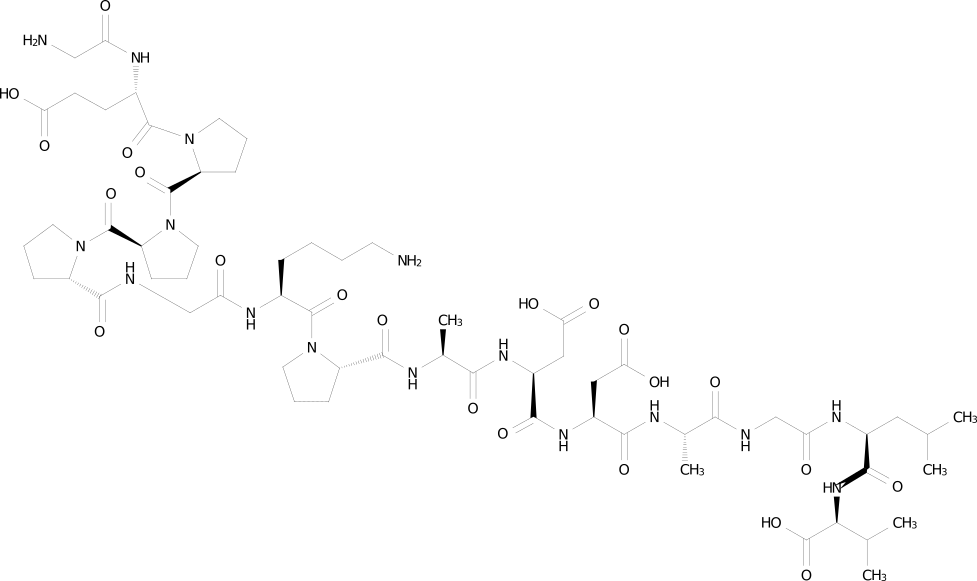
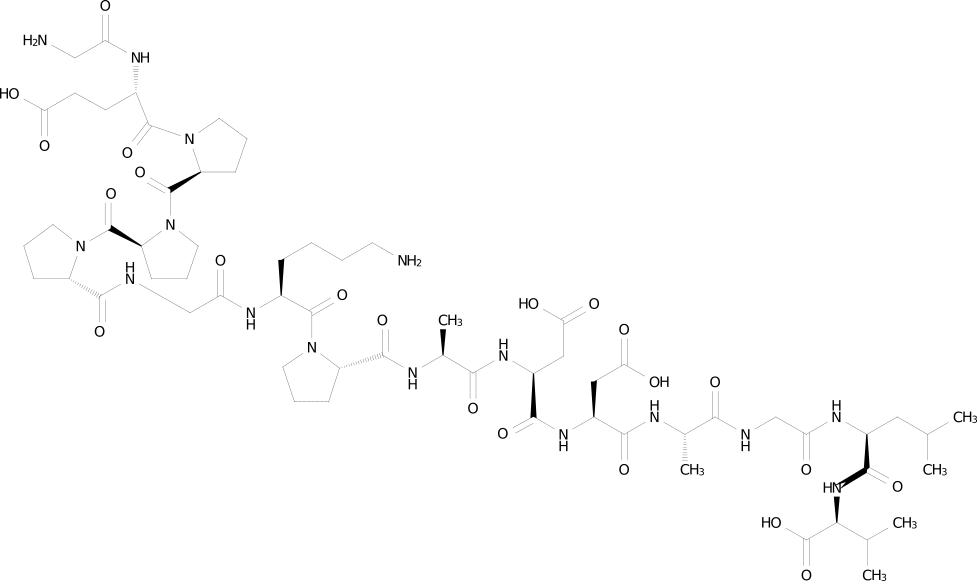
What is TB-500?
TB-500 is a synthetic peptide fragment derived from thymosin beta-4, a naturally occurring protein studied for its role in molecular signaling and pathway dynamics. Research has focused on its potential influence on matrix remodeling, angiogenesis, and molecular migration in preclinical and laboratory models. TB-500 is of particular interest in investigations involving connective tissue, structural dynamics, and extracellular matrix pathways.Goldstein A.L. et al. (2005).
Chemical Profile

Published Research Findings
The following findings are summarized from peer-reviewed literature cited in the References section below.
TB-500 has been studied in structural, vascular, epithelial, and systemic models, with research exploring its roles in collagen organization, extracellular matrix remodeling, angiogenesis, molecular migration, and pathway activity in preclinical settings.
Key Areas Identified in the Literature:
What is Thymosin Beta-4?
TB-500 is a synthetic version of Thymosin Beta-4 (Tβ4), a naturally occurring 43-amino-acid peptide found in virtually all nucleated cells in the human body. It was first identified as a major component of thymic tissue but has since been shown to be expressed in platelets, macrophages, neutrophils, and numerous other cell types involved in repair and regeneration. Thymosin Beta-4 represents one of the most abundant intracellular peptides and plays a fundamental role in actin sequestration — binding G-actin monomers and regulating the cytoskeletal dynamics critical for cell migration, tissue organization, and wound response. Laboratory research has consistently positioned Tβ4 as a multifaceted regenerative signaling peptide. (Source: Goldstein A.L. et al., 2005)
Regenerative & Multifunctional Properties in Research
A comprehensive review by Goldstein and Hannappel (2012) described Thymosin Beta-4 as a multifunctional regenerative peptide with properties extending well beyond simple actin binding. The review outlined laboratory findings across wound healing, cardiac repair, neurological protection, corneal regeneration, and anti-inflammatory modulation. The peptide's ability to promote endothelial cell migration and differentiation has been particularly highlighted as a mechanism underlying observed angiogenic effects in experimental models. The actin-binding domain of Tβ4 — specifically the LKKTET sequence — has been identified as the motif responsible for much of its biological activity, with research confirming that synthetic fragments retaining this sequence maintain comparable activity to the full-length peptide. (Source: Goldstein A.L., Hannappel E. et al., 2012 — PMID: 22820747)
Endothelial Cell Migration Research
Laboratory research by Malinda et al. (1999) demonstrated that Thymosin Beta-4 stimulates directional migration of human umbilical vein endothelial cells (HUVECs) in a dose-dependent manner. This finding provided a mechanistic basis for the vascular remodeling effects observed in wound healing models. Endothelial cell migration is a rate-limiting step in angiogenesis — the formation of new blood vessels — which is essential for tissue repair and oxygen delivery to sites of injury. These in vitro findings supported subsequent in vivo research investigating the peptide's role in tissue regeneration models. All research cited here is from preclinical laboratory settings; TB-500 is for research use only. (Source: Malinda K.M. et al., 1999 — PMID: 10069817)
References
All research findings on this page are derived from the following peer-reviewed publications. Peptide Royalty makes no independent claims — all statements are attributable to the cited authors and their respective studies.
Source TB-500 for Your Research
Laboratory tested · USA manufactured · COA available on every batch
Shop All Products →