What is GHK-Cu?
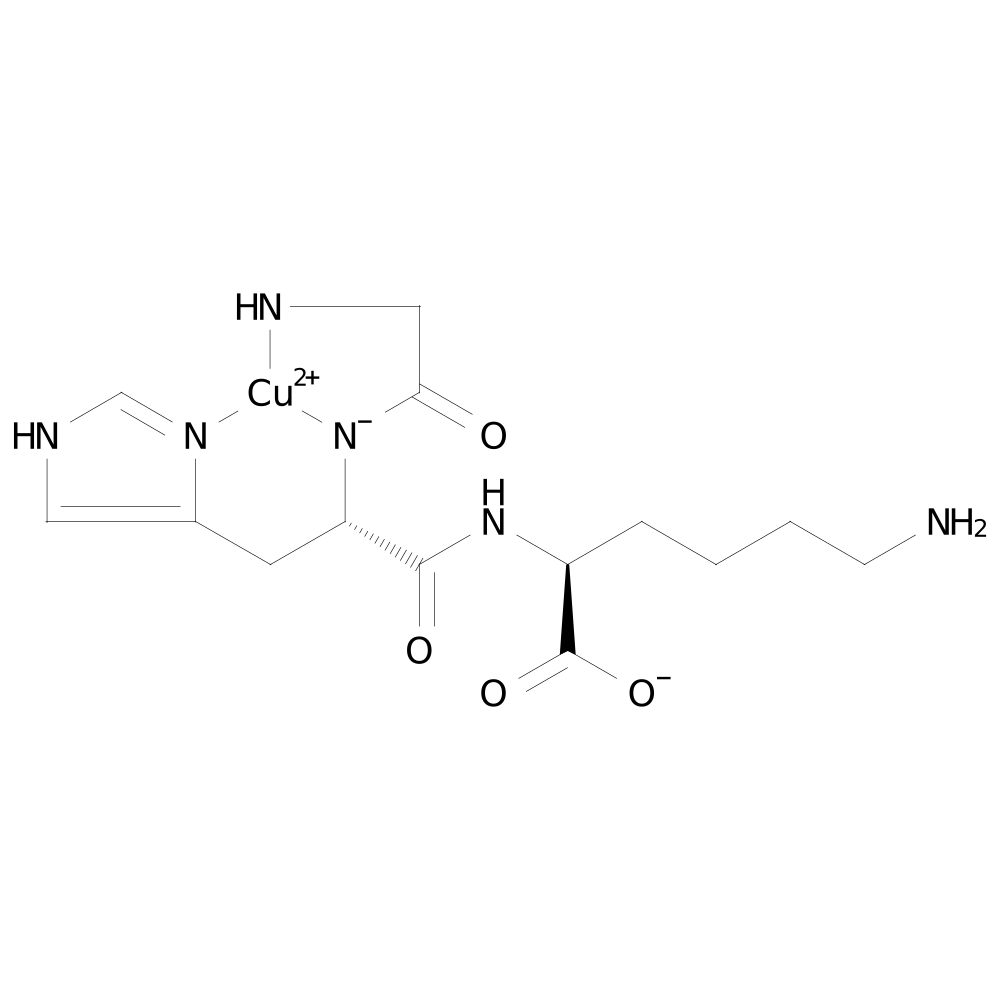
GHK-Cu (glycyl-L-histidyl-L-lysine:copper(II)) is a naturally occurring copper-binding tripeptide studied for its role in molecular signaling, matrix remodeling, and pathway dynamics. In laboratory and preclinical models, GHK-Cu has been associated with modulation of gene expression, angiogenesis, and extracellular matrix activity, making it a valuable tool for research into experimental biology.
Chemical Profile
Published Research Findings
The following findings are summarized from peer-reviewed literature cited in the References section below.
GHK-Cu has been studied in structural, epithelial, and systemic models, with research highlighting its effects on collagen synthesis, extracellular matrix dynamics, and molecular remodeling. Studies also note its role in epithelial modeling, follicle signaling, and cytokine modulation in preclinical settings.
Key Areas Identified in the Literature:
GHK-Cu and Inflammatory Bowel Disease Research
A 2025 study published in Frontiers in Pharmacology investigated the therapeutic potential of GHK-Cu in a dextran sulfate sodium (DSS)-induced murine model of ulcerative colitis — a well-established experimental model of inflammatory bowel disease. The study found that GHK-Cu significantly reduced colitis severity and suppressed major pro-inflammatory cytokines including TNF-α, IL-6, and IL-1β. Importantly, GHK-Cu promoted mucosal healing by upregulating tight junction proteins ZO-1 and Occludin, which are critical for maintaining intestinal barrier integrity. Network pharmacology analysis and molecular docking identified SIRT1 (sirtuin-1) as a primary molecular target of GHK-Cu's mechanism of action. These findings expand the known biological profile of GHK-Cu beyond skin biology into gastrointestinal and inflammatory research contexts. (Source: Mao S. et al., 2025 — PMID: 40672369)
Wound Healing and Angiogenesis
Research by Wang et al. (2017) investigated GHK-Cu formulated in nanoscaled liposomes and its effects on scald wound healing in mice. The liposomal GHK-Cu preparation promoted HUVEC (human umbilical vein endothelial cell) proliferation with a measured 33.1% increased proliferation rate over controls. Flow cytometry analysis confirmed that GHK-Cu-liposomes altered cell cycle distribution, with increased cells at G1 phase. Both VEGF (vascular endothelial growth factor) and FGF-2 (fibroblast growth factor 2) expression were upregulated in treated cells — key angiogenic markers that promote new blood vessel formation and tissue repair. Cell cycle regulators CDK4 and CyclinD1 were also upregulated, suggesting a mechanism of direct cellular proliferation promotion. (Source: Wang X. et al., 2017 — PMID: 28370978)
GHK-Cu Levels and Aging: What the Research Shows
A 2020 review published in Aging Pathobiology and Therapeutics documented a significant age-related decline in circulating GHK-Cu levels. According to published data, GHK serum levels average approximately 200 ng/ml at age 20 but decline to an average of 80 ng/ml by age 60 — a roughly 60% reduction. The review noted that GHK has very high affinity for copper, forming the copper chelate GHK-Cu which exhibits enhanced biological activity. The compound has been shown to promote skin remodeling, wound healing, and regeneration in both in vitro and in vivo studies, with prominent antioxidant and anti-inflammatory effects. Preliminary findings referenced in the review also suggest GHK can partially reverse gene expression patterns associated with aging, though these findings remain early-stage. All findings are from peer-reviewed laboratory research. (Source: Dou Y. et al., 2020 — PMID: 35083444)
References
All research findings on this page are derived from the following peer-reviewed publications. Peptide Royalty makes no independent claims — all statements are attributable to the cited authors and their respective studies.
Source GHK-Cu for Your Research
Laboratory tested · USA manufactured · COA available on every batch
Shop All Products →