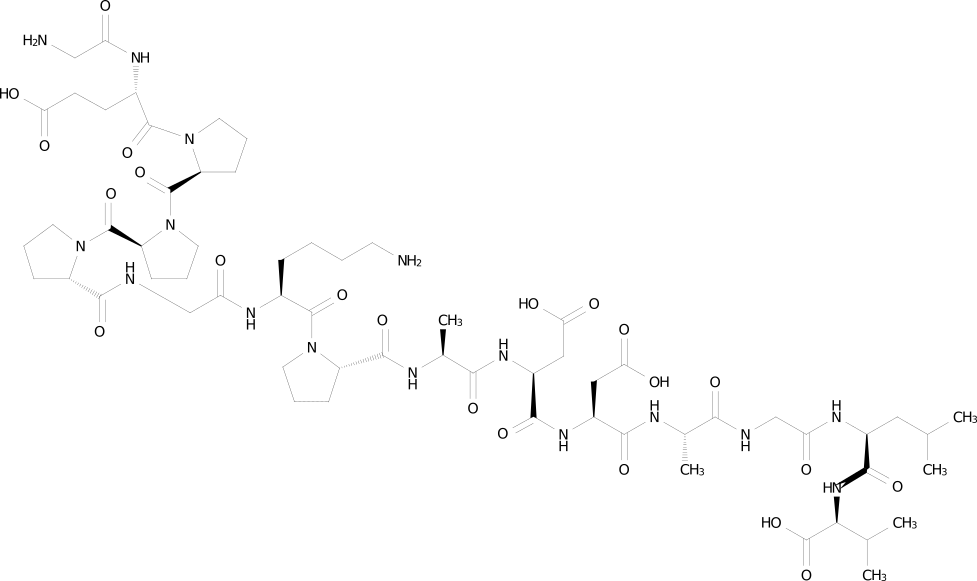
What is GLOW?
The GLOW Blend combines three synthetic peptides studied for their roles in molecular signaling and pathway dynamics: GHK-Cu, BPC-157, and TB-500. Together, these peptides are investigated for their influence on angiogenesis, extracellular matrix remodeling, and systemic signaling pathways. In laboratory and preclinical models, the combination provides a platform for exploring synergistic effects in matrix integrity, vascular formation, and molecular resilience.
Chemical Profile
GHK-Cu
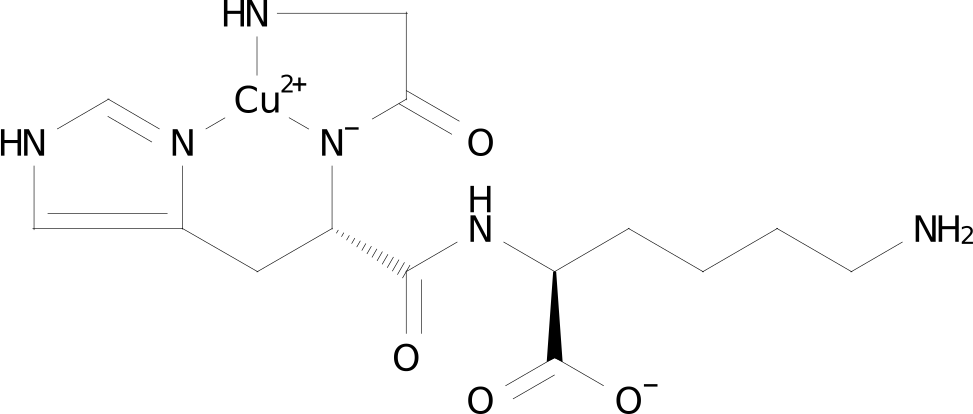
BPC-157
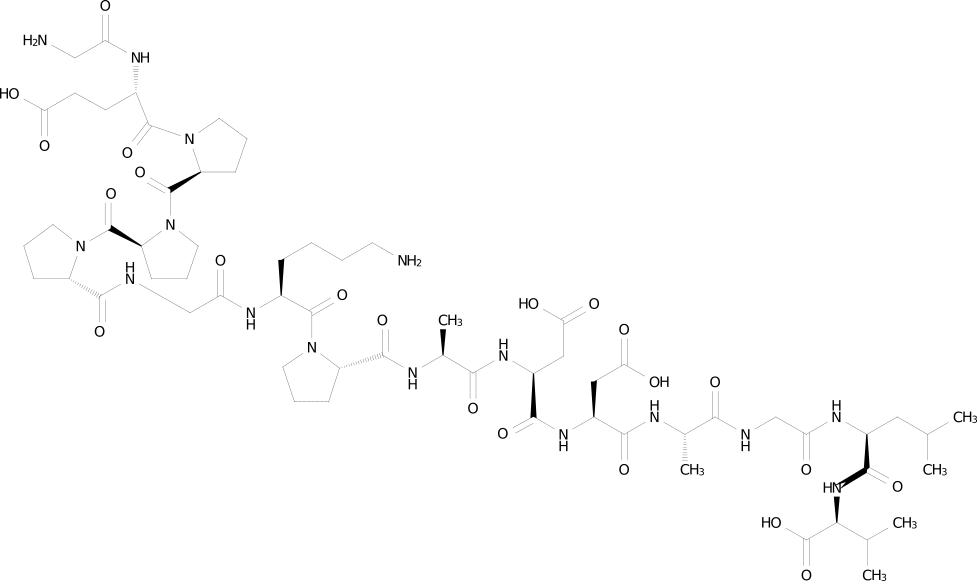
TB-500

Published Research Findings
The following findings are summarized from peer-reviewed literature cited in the References section below.
The GLOW Blend, which combines GHK-Cu, BPC-157, and TB-500, has been studied across structural, epithelial, vascular, and systemic models. Research highlights its activity in collagen organization, molecular migration, angiogenesis, and molecular signaling. Together, these peptides complement one another by engaging pathways linked to matrix remodeling, pathway dynamics, and resilience in preclinical settings.
Key Areas Identified in the Literature:
The Science Behind the GLOW Blend
GLOW is a proprietary peptide blend combining three compounds with independently documented biological activity in laboratory research: GHK-Cu (glycyl-L-histidyl-L-lysine copper), BPC-157 (Body Protective Compound 157), and TB-500 (Thymosin Beta-4). Each of these peptides has been the subject of extensive independent peer-reviewed research covering tissue remodeling, angiogenesis, collagen synthesis, and cellular repair signaling. The rationale for combining these three compounds in research is the complementary nature of their documented mechanisms: GHK-Cu operates primarily through copper-mediated signaling and matrix remodeling, BPC-157 through angiogenic and cytoprotective pathways, and TB-500 through actin-binding and endothelial cell migration. Together they engage structural, vascular, and epithelial research pathways simultaneously. (Source: Pickart L. et al., 2015 — PMID: 26155344; Sikiric P. et al., 1993 — PMID: 8382625; Goldstein A.L. et al., 2005 — PMID: 15894964)
GHK-Cu: The Skin Signaling Component
GHK-Cu, one of the three components of GLOW, has a well-documented research profile focused on skin biology and matrix remodeling. Published research has demonstrated that GHK-Cu upregulates collagen synthesis, stimulates VEGF and FGF-2 expression, and modulates downstream signaling pathways involved in tissue homeostasis. A notable finding from published literature is the significant age-related decline in circulating GHK levels — from approximately 200 ng/ml at age 20 to approximately 80 ng/ml by age 60 — a roughly 60% reduction that has led researchers to study GHK-Cu in the context of age-related tissue biology. Within the GLOW formulation, GHK-Cu contributes the copper-mediated matrix signaling and anti-inflammatory properties that complement the angiogenic and repair-focused actions of BPC-157 and TB-500. (Source: Pickart L. et al., 2015 — PMID: 26155344; Dou Y. et al., 2020 — PMID: 35083444)
Synergistic Pathway Engagement in Blend Research
The scientific interest in peptide blend formulations like GLOW centers on the potential for pathway-level synergy — where two or more compounds engaging adjacent or complementary biological pathways may produce a more comprehensive research model than any single compound alone. BPC-157 has been documented to promote VEGF expression and angiogenesis while also exhibiting cytoprotective effects across multiple organ systems. TB-500 (Thymosin Beta-4) promotes endothelial cell migration and actin cytoskeletal dynamics critical for wound response. GHK-Cu provides copper-dependent matrix remodeling signals and anti-inflammatory cytokine modulation. In combination, these three compounds cover structural remodeling (GHK-Cu), vascular formation (BPC-157 + TB-500), and cellular migration (TB-500) — three of the key biological processes involved in tissue repair research. All findings are derived from individual compound research. For research use only. (Source: Hsieh MJ. et al., 2015 — PMID: 25995620; Goldstein A.L. & Hannappel E. et al., 2012 — PMID: 22820747)
References
All research findings on this page are derived from the following peer-reviewed publications. Peptide Royalty makes no independent claims — all statements are attributable to the cited authors and their respective studies.
Source GLOW for Your Research
Laboratory tested · USA manufactured · COA available on every batch
Shop All Products →