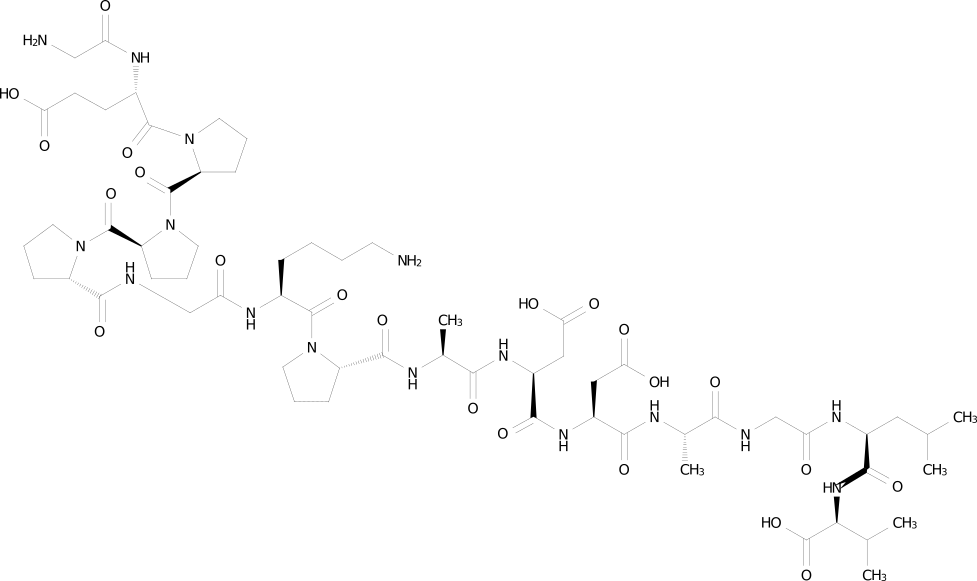
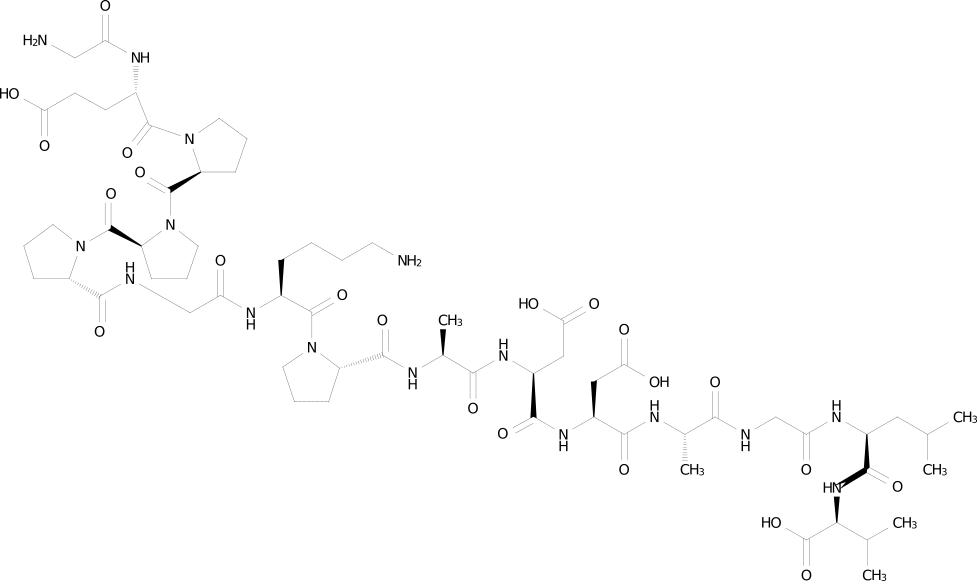
What is GLP-2T?
GLP-2T is a synthetic peptide that functions as a dual pathway agonist. This combination of pathway activity is under investigation in preclinical laboratory models for its ability to modulate downstream signaling cascades and molecular interactions. Research efforts focus on its role in receptor-mediated molecular responses across biological systems.Frias J.P. et al. (2021).
Chemical Profile

Published Research Findings
The following findings are summarized from peer-reviewed literature cited in the References section below.
GLP-2T has been studied in structural, endocrine, and molecular models, with research highlighting its effects on downstream signaling cascades, pathway modulation, and receptor-mediated activity. Findings also emphasize its role in target pathway dynamics, intracellular signaling, and synergistic pathway interactions in preclinical settings.
Key Areas Identified in the Literature:
Tirzepatide: Dual GIP/GLP-1 Receptor Agonism
Tirzepatide (the compound referenced as GLP-2T in our catalog) is a dual glucose-dependent insulinotropic polypeptide (GIP) and glucagon-like peptide-1 (GLP-1) receptor agonist. Unlike earlier GLP-1 analogs that target only the GLP-1 receptor, tirzepatide activates both incretin hormone receptors simultaneously, producing complementary metabolic effects. A 2022 study by Coskun et al. in Diabetes provided detailed pharmacological characterization of tirzepatide as a novel dual agonist, demonstrating that coordinated activation of GIP and GLP-1 receptors produced superior glucose-lowering and body-weight-reducing effects in research models compared to either receptor agonism alone. (Source: Coskun T. et al., 2022)
Phase 3 Clinical Trial Data (SURPASS-2)
The SURPASS-2 trial, published in the New England Journal of Medicine in 2021, compared once-weekly tirzepatide (at 5 mg, 10 mg, and 15 mg doses) against once-weekly semaglutide (1 mg) in 1,879 patients with type 2 diabetes over 40 weeks. Tirzepatide demonstrated non-inferiority and superiority to semaglutide for HbA1c reduction. Mean HbA1c reductions were -2.01% (5mg), -2.24% (10mg), and -2.30% (15mg) with tirzepatide versus -1.86% with semaglutide. Body weight reductions were correspondingly greater with tirzepatide: 1.9 kg, 3.6 kg, and 5.5 kg greater than semaglutide at the three dose levels respectively. Adverse events were primarily gastrointestinal and mild-to-moderate in severity — a profile consistent with the GLP-1 receptor agonist drug class. (Source: Frias J.P. et al., 2021 — NEJMoa2107519; Coskun T. et al., 2022)
References
All research findings on this page are derived from the following peer-reviewed publications. Peptide Royalty makes no independent claims — all statements are attributable to the cited authors and their respective studies.
Source GLP-2T for Your Research
Laboratory tested · USA manufactured · COA available on every batch
Shop All Products →