What is Ipamorelin?
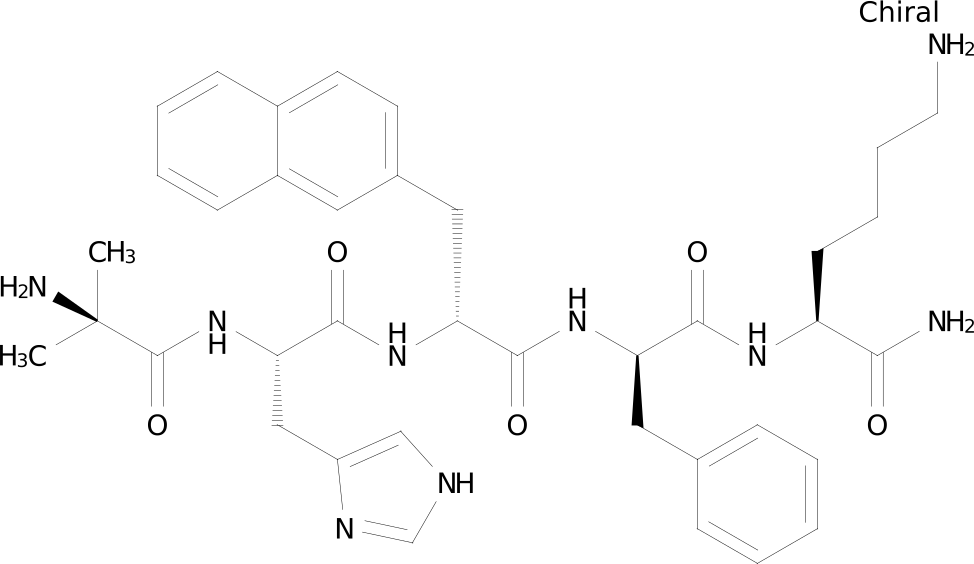
Ipamorelin is a synthetic pentapeptide and selective secretagogue-type agonist. It is studied in preclinical and experimental research for its selective pituitary signaling activity with minimal off-target pathway interference. This selectivity makes it an important tool for investigating endocrine signaling, somatotroph axis modulation, and related molecular pathways.
Chemical Profile
Published Research Findings
The following findings are summarized from peer-reviewed literature cited in the References section below.
Ipamorelin has been studied in endocrine, metabolic, and regenerative models, with research highlighting its activity in stimulating growth hormone release, modulating IGF-1 pathways, and supporting tissue recovery processes. Studies have also examined its role in metabolic regulation, energy balance, and cellular repair in preclinical systems.
Key Areas Identified in the Literature:
Ipamorelin: A Selective Growth Hormone Secretagogue
Ipamorelin is a synthetic pentapeptide growth hormone secretagogue first described by Bowers et al. (1997) in Endocrinology. It belongs to the GHRP (growth hormone-releasing peptide) family but is distinguished by a notably selective pharmacological profile. Unlike earlier GHRPs such as GHRP-2 and GHRP-6, Ipamorelin stimulates GH release with minimal effect on other pituitary hormones including cortisol, prolactin, and ACTH — a selectivity profile that made it a significant focus of subsequent research. The pentapeptide structure of Ipamorelin represents one of the smallest known GHRP-type molecules capable of potently stimulating GH secretion, and its discovery contributed substantially to understanding the structure-activity relationships of this peptide class. (Source: Bowers C.Y. et al., 1997 — PMID: 9075700)
Clinical Pharmacology: GH Selectivity Without Cortisol Elevation
A key human pharmacology study by Svensson et al. (1998), published in the Journal of Clinical Endocrinology and Metabolism, examined Ipamorelin administration in healthy human subjects and confirmed the peptide's selective GH-stimulating profile. The study demonstrated that Ipamorelin produced dose-dependent GH release without statistically significant increases in cortisol or prolactin — hormones that are characteristically elevated by earlier generation GHRPs. This selectivity was considered a meaningful pharmacological advance in secretagogue research, as cortisol elevation is an undesirable effect in most research contexts. The study also characterized the pharmacokinetic profile and GH pulse dynamics following Ipamorelin administration, establishing baseline parameters for subsequent research. (Source: Svensson J. et al., 1998)
Mechanism: Ghrelin Receptor Activation
Ipamorelin acts as an agonist at the growth hormone secretagogue receptor (GHS-R1a), also known as the ghrelin receptor — the same receptor targeted by the endogenous hormone ghrelin. Activation of GHS-R1a in the pituitary and hypothalamus stimulates GH release through intracellular calcium mobilization and protein kinase C signaling pathways. Research by Culler et al. (2002) provided detailed pharmacological characterization of Ipamorelin's activity at this receptor, confirming agonist binding kinetics and downstream GH secretion dynamics in cell and tissue preparations. The ghrelin receptor system has attracted broad research interest due to its roles in energy balance, GH regulation, gastric motility, and appetite modulation, making Ipamorelin a useful tool compound for studying this receptor pathway. All cited research is from published peer-reviewed literature. Ipamorelin is for research use only. (Source: Culler M.D. et al., 2002 — PMID: 12176660)
References
All research findings on this page are derived from the following peer-reviewed publications. Peptide Royalty makes no independent claims — all statements are attributable to the cited authors and their respective studies.
Source Ipamorelin for Your Research
Laboratory tested · USA manufactured · COA available on every batch
Shop All Products →