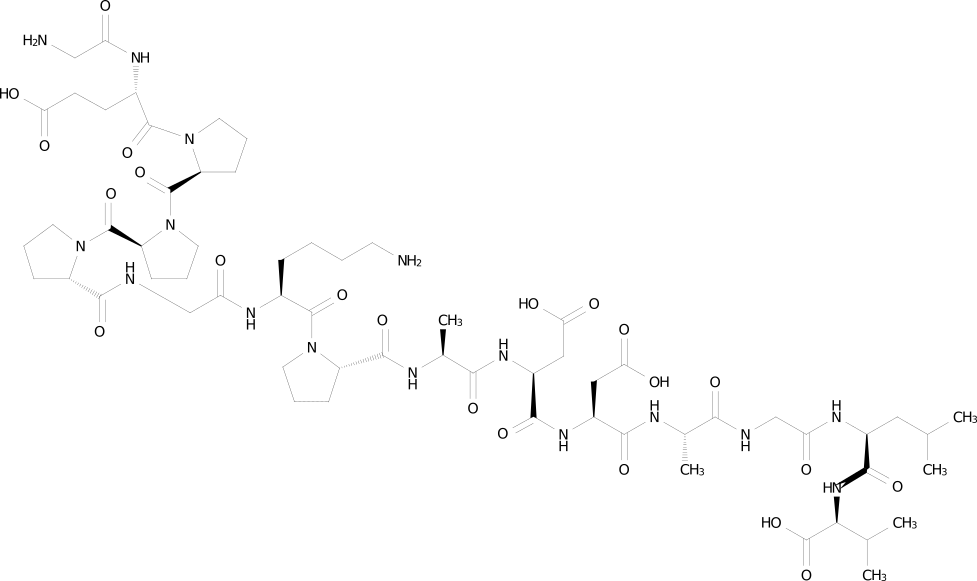
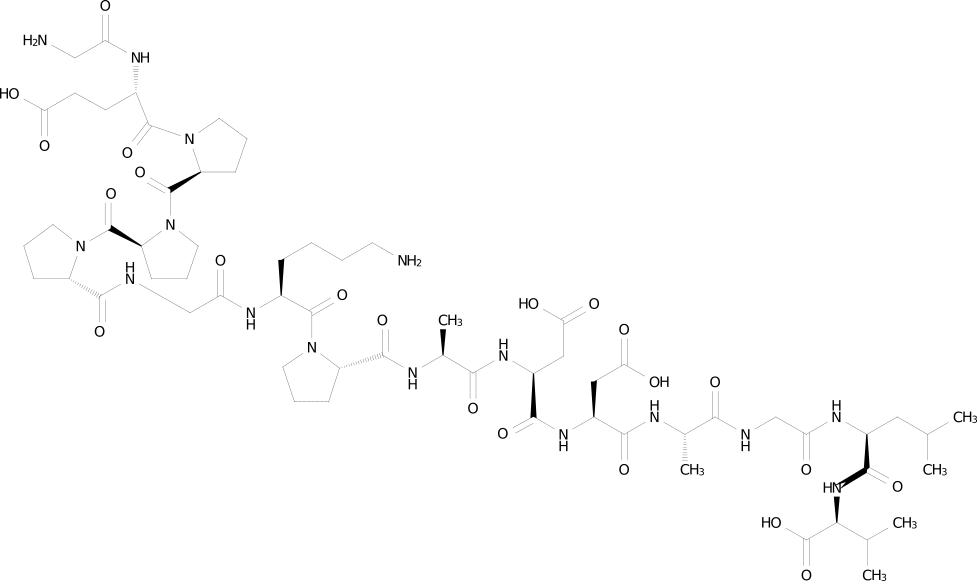
What is MOTS-c?
MOTS-c (Mitochondrial ORF of the 12S rRNA type-c) is a 16-amino-acid mitochondria-derived peptide encoded within the 12S ribosomal RNA gene of the mitochondrial genome. First described in 2015, it represents a newly characterized class of mitochondria-derived peptides (MDPs) that function as inter-organelle signaling molecules. MOTS-c has been studied in preclinical models for its role in metabolic regulation, including effects on insulin sensitivity, fatty acid oxidation, and AMPK activation. Research has also explored its potential relevance to aging-associated metabolic changes.
Chemical Profile

Published Research Findings
The following findings are summarized from peer-reviewed literature cited in the References section below.
MOTS-c has been studied in mitochondrial, molecular, and systemic models, with research highlighting its role in mitochondrial function, AMPK pathway activation, and signaling dynamics. Studies also report activity in substrate utilization, downstream markers, and molecular stress responses in preclinical settings.
Key Areas Identified in the Literature:
Discovery: A Peptide Encoded by Mitochondrial DNA
MOTS-c (Mitochondrial Open Reading Frame of the 12S rRNA-c) was identified in 2015 by Lee et al. in a landmark Cell Metabolism study. Researchers discovered a short open reading frame (sORF) within the mitochondrial 12S rRNA gene that encodes a novel 16-amino-acid peptide. This was a significant finding because it challenged the long-held assumption that mitochondria encode only proteins of the respiratory chain. MOTS-c is now classified as a mitochondrial-derived peptide (MDP) — one of a new class of bioactive signaling molecules originating from the mitochondrial genome. Its primary identified target organ is skeletal muscle, where it exerts regulatory effects on glucose and lipid metabolism. (Source: Lee C. et al., 2015 — PMID: 25738459)
Metabolic Regulation and AMPK Activation
Mechanistically, MOTS-c has been shown to inhibit the folate cycle and de novo purine biosynthesis in skeletal muscle cells, leading to accumulation of AICAR (an AMP analog) and subsequent activation of AMPK (AMP-activated protein kinase) — a master metabolic regulator. AMPK activation promotes glucose uptake, fatty acid oxidation, and mitochondrial biogenesis while suppressing anabolic processes that consume cellular energy. In laboratory models, MOTS-c administration improved insulin sensitivity, reduced adiposity, and enhanced metabolic homeostasis. A 2017 study by Zhu et al. further demonstrated that MOTS-c enhances metabolic homeostasis and mitochondrial function in aging laboratory models, suggesting it may play a role in the mitochondria-to-nucleus retrograde signaling axis that declines with age. (Source: Lee C. et al., 2015 — PMID: 25738459; Zhu S. et al., 2017 — PMID: 28604693)
MOTS-c as a Mitochondrial Signaling Peptide
A 2016 perspective by Lee, Yen, and Cohen in the Journal of Physiology outlined a broader framework for understanding MOTS-c as part of a new class of mitochondrial peptides that function as systemic hormones — circulating in the bloodstream and communicating mitochondrial stress status to distant tissues. This retrograde mitochondria-to-nucleus signaling concept has significant implications for how researchers understand metabolic adaptation to physiological stressors. MOTS-c levels in human plasma have been shown to decline with age and differ between metabolically healthy and unhealthy individuals, making it an active area of investigation in aging and metabolic research. All findings are from published peer-reviewed literature; MOTS-c is for research purposes only. (Source: Lee C., Yen K., Cohen P., 2016 — PMID: 26858423)
References
All research findings on this page are derived from the following peer-reviewed publications. Peptide Royalty makes no independent claims — all statements are attributable to the cited authors and their respective studies.
Source MOTS-c for Your Research
Laboratory tested · USA manufactured · COA available on every batch
Shop All Products →