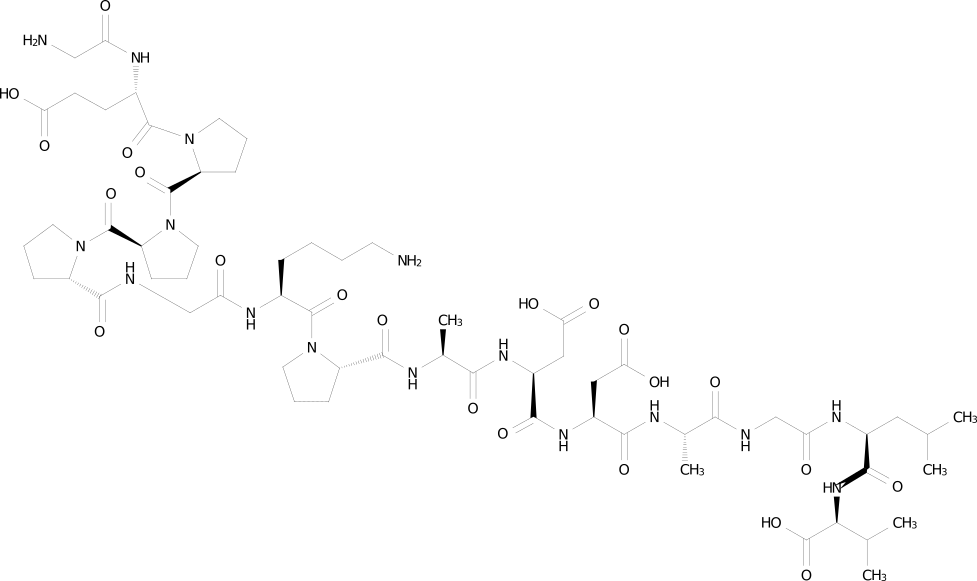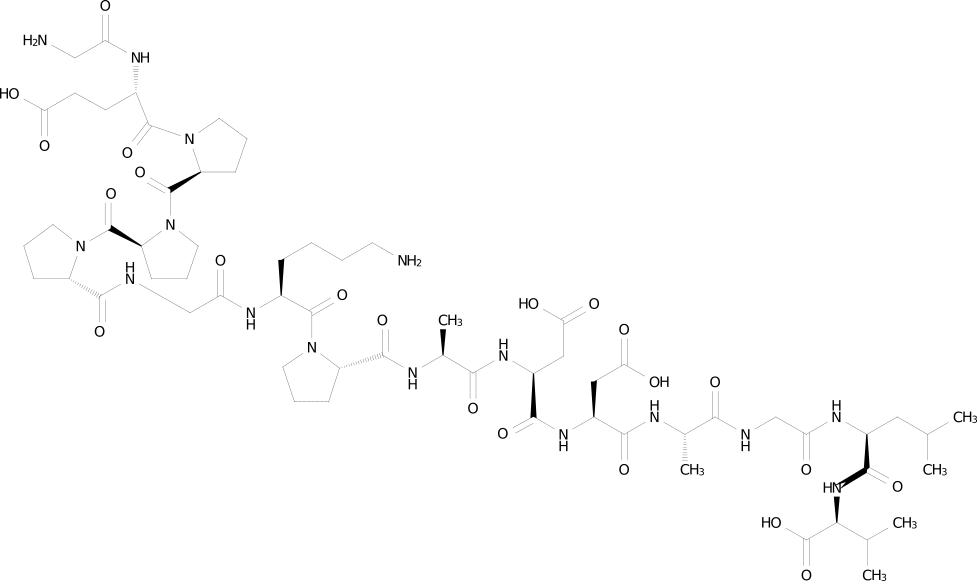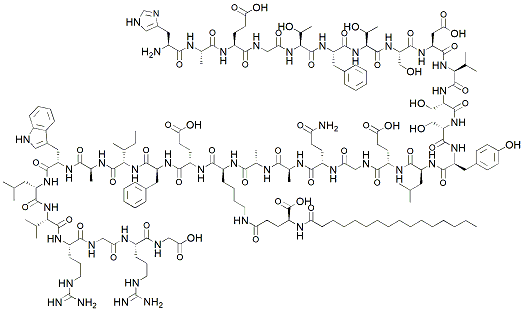
What is NAD+?
Nicotinamide adenine dinucleotide (NAD⁺) is a naturally occurring coenzyme central to redox reactions, bioenergetic processes, and molecular signaling. In laboratory and preclinical models, NAD⁺ has been studied for its role in mitochondrial function, genomic pathway signaling, and regulation of molecular resilience. Research continues to explore its influence on sirtuin activation, oxidative stress response, and downstream signaling pathways.Verdin E. (2015).
Chemical Profile

Published Research Findings
The following findings are summarized from peer-reviewed literature cited in the References section below.
NAD⁺ has been investigated in bioenergetic, molecular, and systemic models, with research highlighting its role in mitochondrial function, redox dynamics, and molecular remodeling processes. Studies have also examined its influence on oxidative stress, genomic pathway signaling, and overall molecular resilience in preclinical settings.
Key Areas Identified in the Literature:
NAD+ as a Central Metabolic Regulator
Nicotinamide adenine dinucleotide (NAD+) is one of the most studied coenzymes in biochemistry, playing an essential role in cellular redox reactions, energy metabolism, and signal transduction. A landmark review by Canto et al. (2015), published in Cell Metabolism, examined how NAD+ metabolism links cellular energy status with adaptive organismal responses. The review established that NAD+ acts as a vital cofactor that can fundamentally rewire metabolism, activate sirtuin deacetylases (SIRT1–7), and maintain mitochondrial fitness through mechanisms including the mitochondrial unfolded protein response (UPRmt). The authors highlighted that NAD+-boosting strategies have therapeutic potential across a wide spectrum of diseases — from diabetes to neurodegeneration — based on this central metabolic role. (Source: Canto C. et al., 2015 — PMID: 26118927)
NAD+ in Aging and Neurodegeneration Research
A comprehensive review by Verdin (2015) in Cell Metabolism outlined the role of NAD+ specifically in the contexts of aging, metabolic regulation, and neurodegeneration. Cellular NAD+ levels are known to decline significantly with age in most tissues studied, and this decline has been associated with mitochondrial dysfunction, impaired DNA repair, and reduced sirtuin activity. Research cited in this review positions NAD+ restoration as a potential strategy for studying age-related biological decline in laboratory models. Importantly, NAD+ itself does not cross the blood-brain barrier efficiently, which has led researchers to study precursor molecules (such as NMN and NR) that can be converted to NAD+ intracellularly. The metabolic research in this space has made NAD+ one of the most actively studied compounds in longevity biology. (Source: Verdin E., 2015)
Energy Homeostasis and the NAD+/NADH Ratio
The ratio of NAD+ to NADH (its reduced form) serves as a critical sensor of cellular energy status. When cells are energetically stressed — during fasting, exercise, or caloric restriction — NAD+ levels rise relative to NADH, activating sirtuin pathways and AMPK signaling cascades that drive energy-conserving and repair responses. Published research has consistently demonstrated that interventions that elevate NAD+ levels in laboratory models recapitulate many of the metabolic benefits associated with caloric restriction, including improved mitochondrial function, increased fatty acid oxidation, and enhanced insulin sensitivity. These findings have positioned NAD+ research at the intersection of metabolic biology, aging science, and mitochondrial medicine. All information is from published peer-reviewed sources and is for research purposes only. (Source: Elhassan Y.S. et al., 2017 — PMID: 28845843)
References
All research findings on this page are derived from the following peer-reviewed publications. Peptide Royalty makes no independent claims — all statements are attributable to the cited authors and their respective studies.
Source NAD+ for Your Research
Laboratory tested · USA manufactured · COA available on every batch
Shop All Products →