What is PT-141?
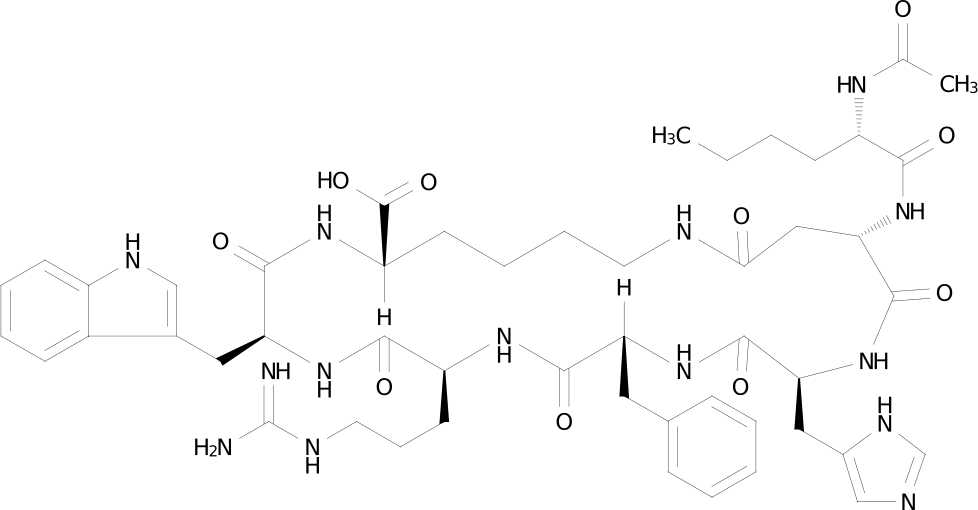
PT-141, also known as Bremelanotide, is a synthetic peptide analog of α-melanocyte-stimulating hormone (α-MSH). It is studied in laboratory and preclinical models for its ability to activate melanocortin receptors (MC3R and MC4R), which are involved in neuroendocrine signaling, energy regulation, and vascular pathways.Dorr R.T. et al. (1996).
Chemical Profile
Published Research Findings
The following findings are summarized from peer-reviewed literature cited in the References section below.
PT-141 has been studied in neurological, endocrine, and systemic models, with research highlighting its activity in target receptor pathways, neuroendocrine signaling, and systemic dynamics. Studies also report effects on central nervous system activity, endocrine modulation, and vascular responses in preclinical settings.
Key Areas Identified in the Literature:
PT-141: A Synthetic Melanocortin Peptide
PT-141, also known as Bremelanotide, is a synthetic cyclic heptapeptide analog of alpha-melanocyte-stimulating hormone (alpha-MSH). It was originally derived from Melanotan II, a linear analog of alpha-MSH, through a metabolite identified during early clinical investigations. Unlike most peptides in its class, PT-141 acts centrally through the nervous system by activating melanocortin receptors — specifically MC3R and MC4R — rather than acting peripherally on vascular or hormonal targets directly. This central mechanism of action distinguishes it pharmacologically from other compounds in the field of neuroendocrine peptide research. Early pharmacological profiling by Dorr et al. (1996) established its receptor binding profile and preclinical activity, forming the foundation for subsequent research into melanocortin receptor biology. (Source: Dorr R.T. et al., 1996 — PMID: 8874162)
Melanocortin Receptor Pharmacology
Research by Shadiack et al. (2002) published in the Journal of Pharmacology and Experimental Therapeutics examined the receptor pharmacology of PT-141 at melanocortin receptor subtypes. The melanocortin system is a neuroendocrine signaling network involving five receptor subtypes (MC1R through MC5R), each distributed differently across the central and peripheral nervous system. MC3R is expressed in the hypothalamus and limbic system — areas associated with energy balance and motivational behavior — while MC4R is widely expressed throughout the brain and spinal cord and plays established roles in autonomic and neuroendocrine regulation. PT-141 demonstrates agonist activity at both receptor subtypes, and research has focused on characterizing the downstream signaling consequences of this dual activation in laboratory models. (Source: Shadiack A.M. et al., 2002 — PMID: 12192087)
MC3R and MC4R Receptor Selectivity Research
A 2005 study by King et al., published in Peptides, examined the receptor selectivity profile of PT-141 with particular focus on its binding affinity at MC3R and MC4R sites. Understanding receptor selectivity is critical in peptide pharmacology research because different receptor subtypes mediate distinct physiological effects. The research characterized the binding kinetics and agonist potency of PT-141 across receptor preparations, contributing to the broader literature on melanocortin peptide pharmacology. The melanocortin receptor system has attracted significant research interest due to its involvement in diverse biological functions including pigmentation, energy homeostasis, inflammation, and neuroendocrine signaling. PT-141 is for research purposes only. (Source: King S.H. et al., 2005 — PMID: 15916786)
References
All research findings on this page are derived from the following peer-reviewed publications. Peptide Royalty makes no independent claims — all statements are attributable to the cited authors and their respective studies.
Source PT-141 for Your Research
Laboratory tested · USA manufactured · COA available on every batch
Shop All Products →